SR Cooper Publishing

Independent imprint · Newport Beach, California

Books about how mortgages and homebuying actually work.

Most mortgage advice is written either for the industry or for nobody in particular. These books are written for the person signing the paperwork — with the real rules, the real math, and the parts nobody explains until it's too late to change them.

Written by Stuart Cooper. 30+ years in mortgage lending, condensed into five books.

Cover of The Mortgage Is Not the Plan

The books

Five guides, written for different people at different moments. Each one comes with its own worksheets or calculators.

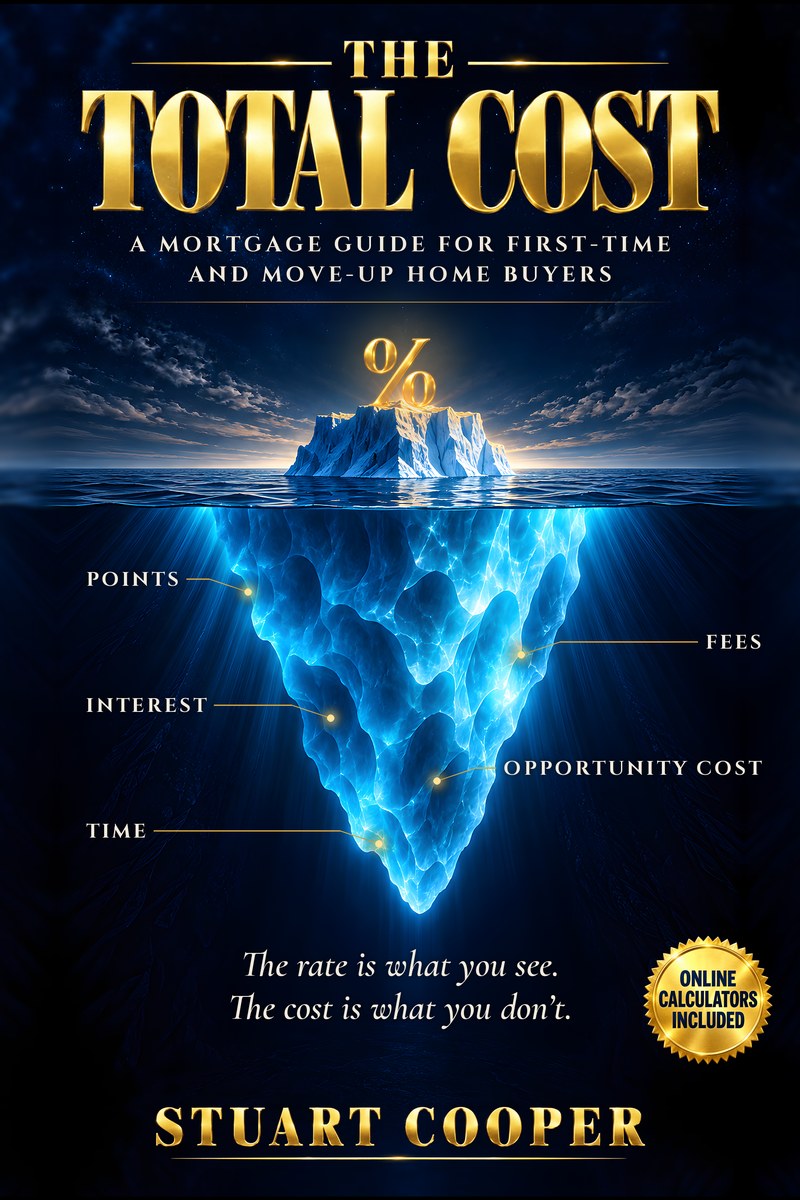
Cover of The Total Cost
Coming soon

The Total Cost

A Mortgage Guide for First-Time and Move-Up Home Buyers

Most buyers shop for the lowest rate. Almost none ask what that rate costs to get, or how long they will actually keep the loan. This book flips the question: start with how long you'll hold the mortgage, then compare every option by what it really costs over that time, including points, fees, interest, and the money you could have kept working elsewhere.

  • Hardcover & paperback
  • 24 online calculators
  • A calculator for every chapter
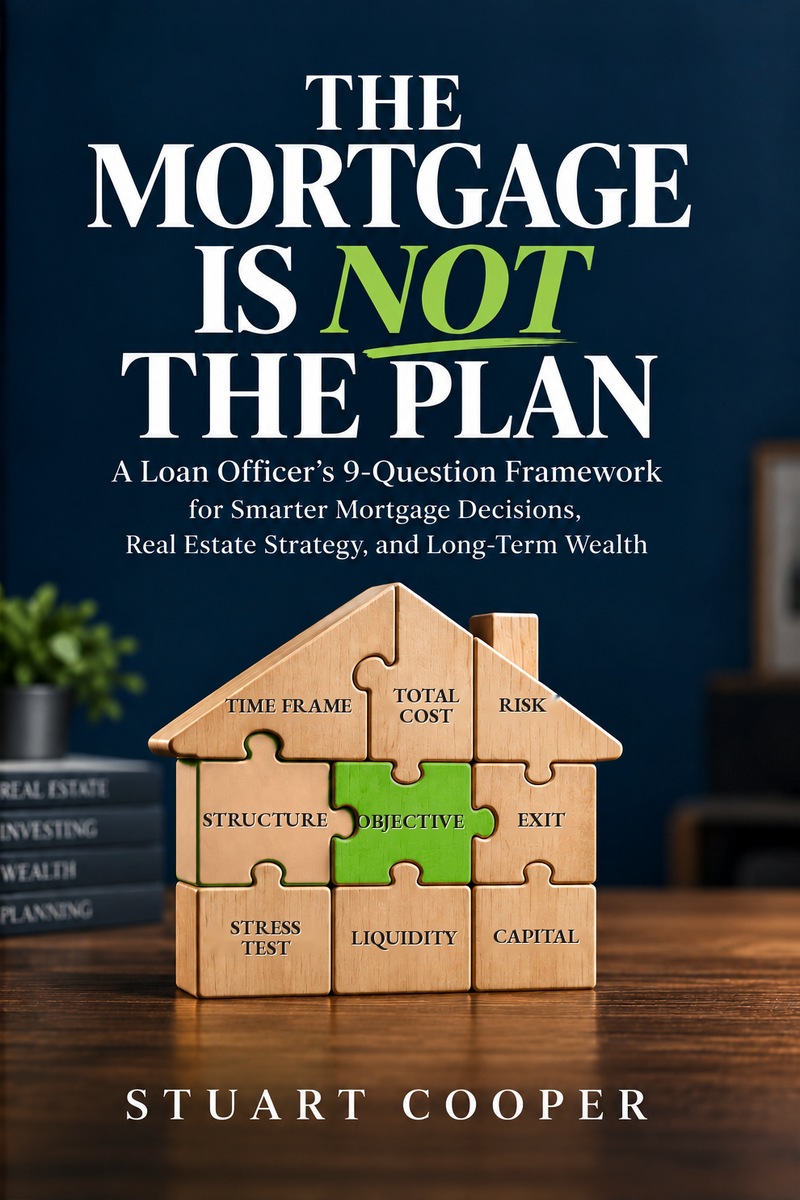
Cover of The Mortgage Is Not the Plan
Coming soon

The Mortgage Is Not the Plan

A Loan Officer's 9-Question Framework for Smarter Mortgage Decisions, Real Estate Strategy, and Long-Term Wealth

The other books end at the closing table. This one starts there. Almost nobody is ever told that a mortgage can have a strategy — only what they qualify for and what the rate is. Nine questions, asked in order, covering what a loan actually costs over the years you hold it, why the lowest payment is often the most expensive loan you will own, what your equity is for, when paying off the mortgage is right and when it is the worst use of the money, and whether the whole arrangement survives a bad year.

  • 16 chapters
  • Paperback & Kindle
  • 8 companion worksheets
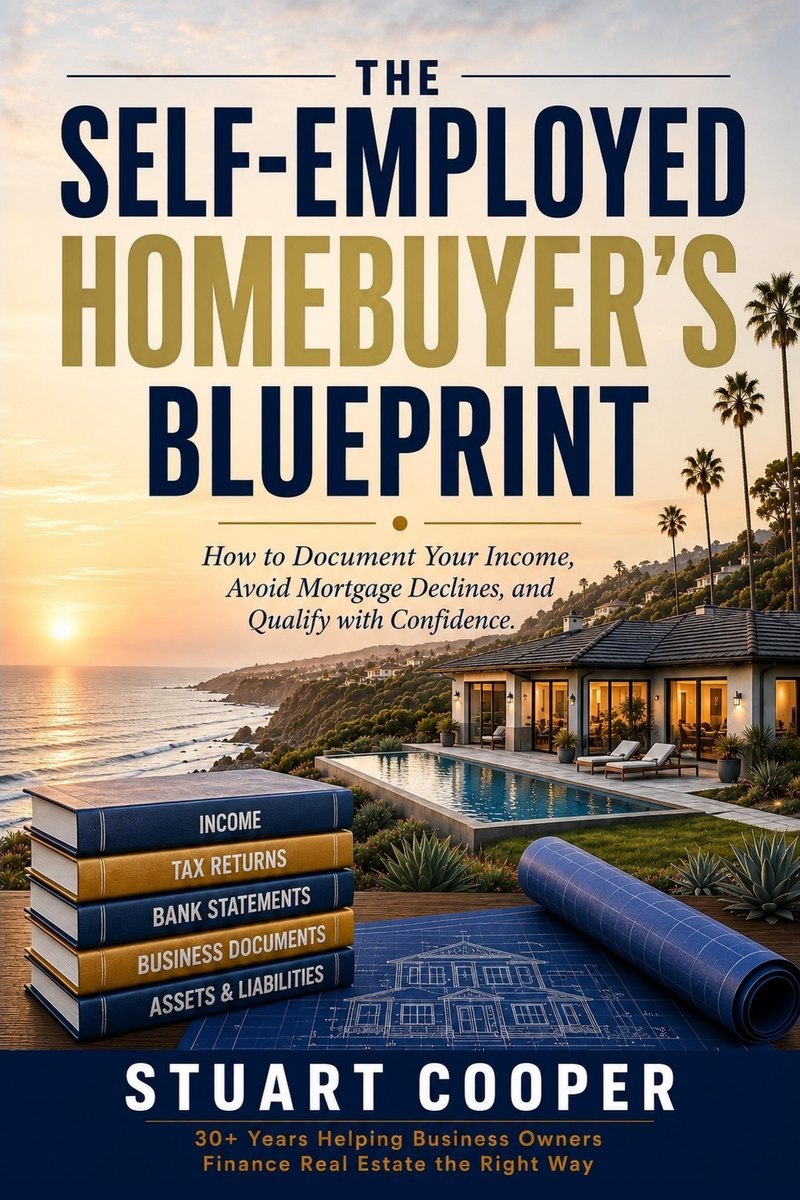
Cover of The Self-Employed Homebuyer's Blueprint
Coming soon

The Self-Employed Homebuyer's Blueprint

How to Document Your Income, Avoid Mortgage Declines, and Qualify with Confidence

If you're self-employed, the hard part isn't earning the money — it's proving it. This book walks through how lenders actually calculate self-employment income, entity by entity: sole proprietor, LLC, partnership, S-corp, C-corp, rental. It covers what gets added back, what gets subtracted, why a good tax return can be a bad loan file, and how to plan the two years before you buy instead of finding out afterward.

  • 26 chapters
  • Paperback & Kindle
  • 12 companion worksheets
Cover of Your First California Home
In progress

Your First California Home

A Step-by-Step Guide for First-Time Homebuyers to Qualify, Buy Smart, and Get the Keys With Confidence

A step-by-step guide through a California purchase, in the order it actually happens. Prequalification, credit, down payment sources, loan programs, offers and contingencies, inspections, appraisal, escrow, closing, and the first year of ownership — including the California-specific parts that surprise people: supplemental tax bills, impound schedules, how title is held, and the homeowners' exemption.

  • 14 chapters
  • California-specific
  • Worksheets & glossary
Cover of Your Next California Home
Coming soon

Your Next California Home

Equity, Tax Strategy, and Financing for the Experienced Buyer

For the California owner buying again. After a long time in one house the equity isn't the problem — what's attached to it is: a Proposition 13 basis that can't be bought at today's prices, a gain that outgrew the exclusion, and a mortgage the underwriter keeps counting until the old house is resolved. The book is built around one decision — sell it, rent it, or keep it — and works each branch through in figures, including the parts of Proposition 19 that consumer guidance still gets wrong.

  • 16 chapters
  • Paperback
  • Worksheets & glossary

About the author

Stuart Cooper has spent more than thirty years in mortgage lending, starting in 1992 while finishing a finance degree at USC. Early in his career he worked alongside analytical engineers, which shaped how he approaches a loan file — comparing structures, testing assumptions, and looking past the application to what the numbers are actually saying.

He has worked on files ranging from first-time FHA buyers to twenty-million-dollar purchases, and on borrowers whose income arrives through multiple businesses, partnerships, and properties. He writes because the same misunderstandings cost the same people the same houses, year after year, and almost all of them are fixable months before anyone starts looking at listings.

He lives in Newport Beach with his wife and two children.